

2026-03-23
When companies evaluate packaging materials for palletized shipments, many procurement teams focus on one number: the price per roll.
At first glance, choosing the lowest-priced pallet wrap seems like the most economical decision. In reality, however, experienced logistics managers know that the roll price tells only a small part of the story.
The metric that truly determines packaging efficiency is cost per pallet—how much wrapping film is required to secure one load during storage and transportation.
Once companies start measuring performance this way, the conversation quickly shifts from cheap material to efficient load containment.
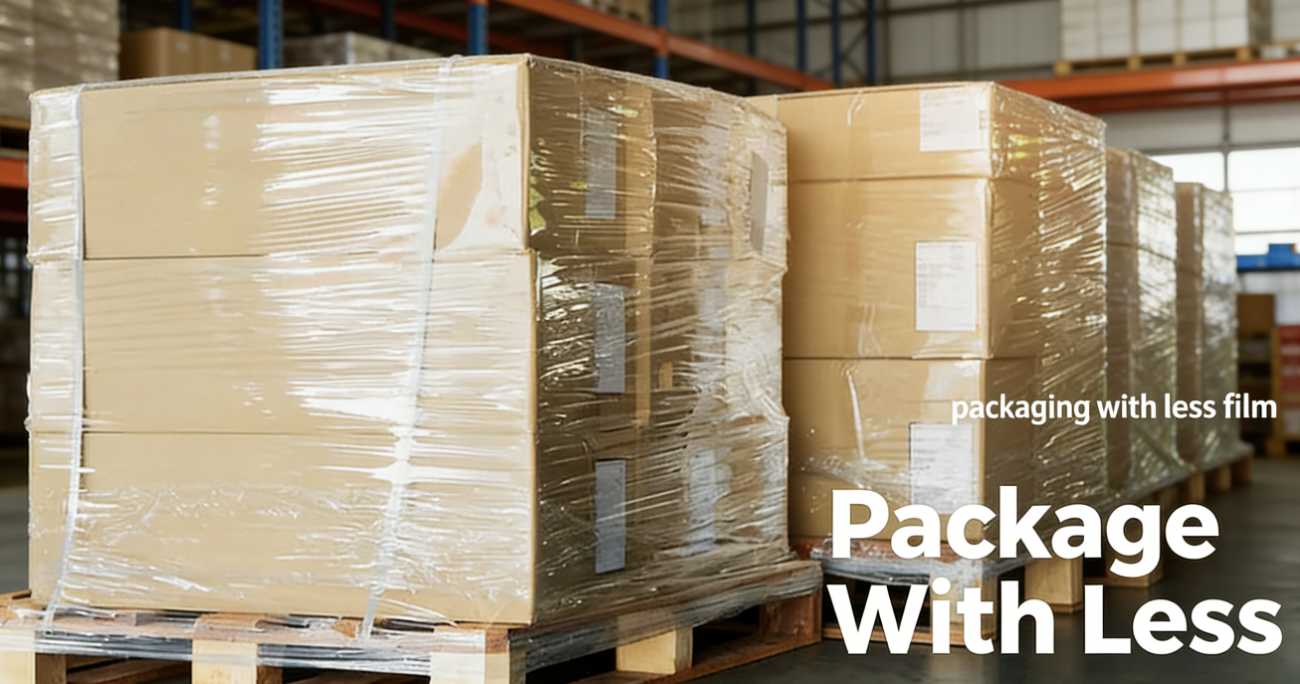
The cost per pallet measures how much film is actually consumed to stabilize a single pallet load.
Unlike the price per roll, this calculation reflects real operational performance.
Several factors influence how much material is needed for each load:
A cheaper film often requires additional layers to achieve the same stability, which increases overall material usage.
As a result, the lowest-priced roll does not always lead to the lowest packaging cost.
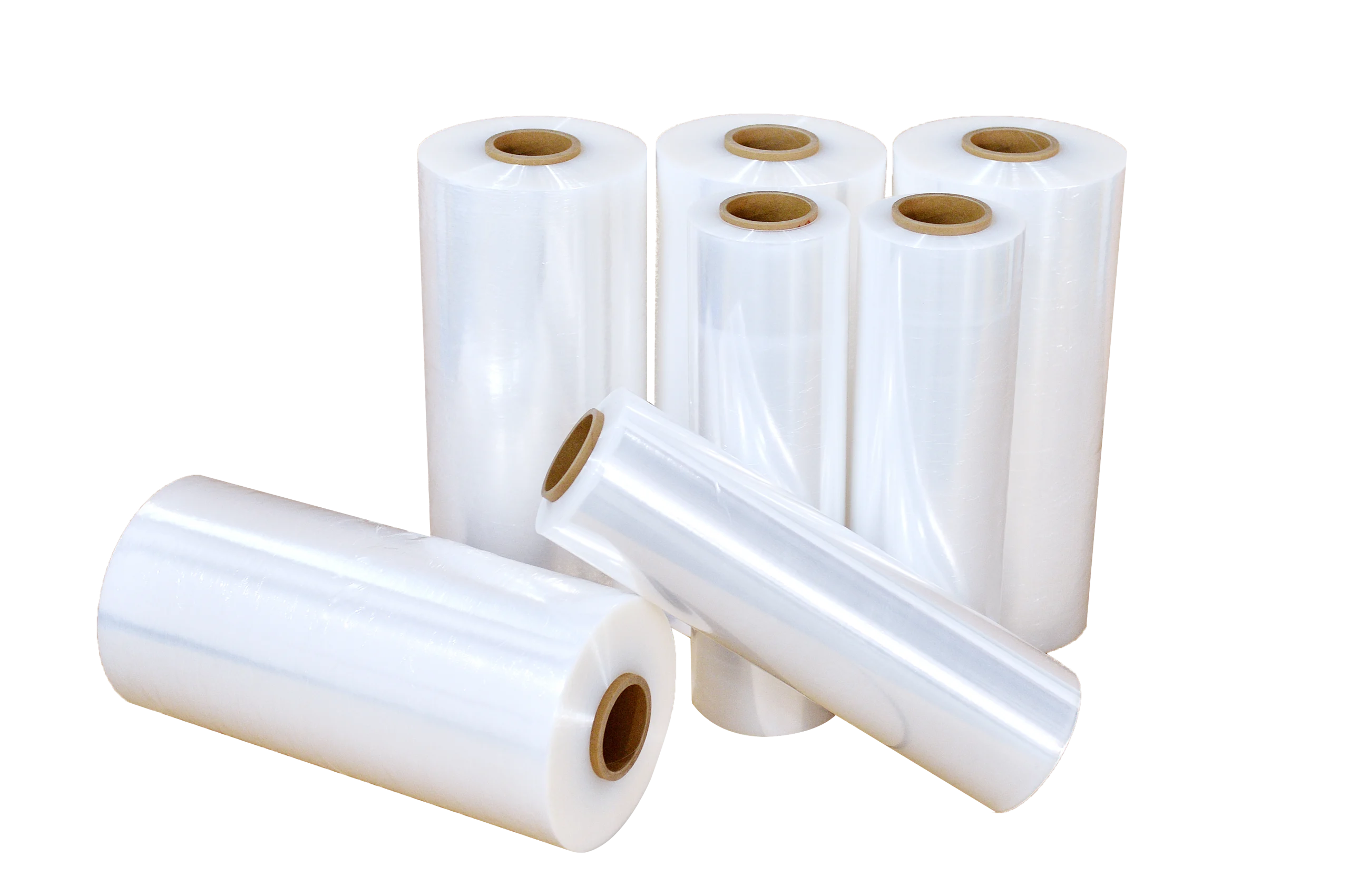
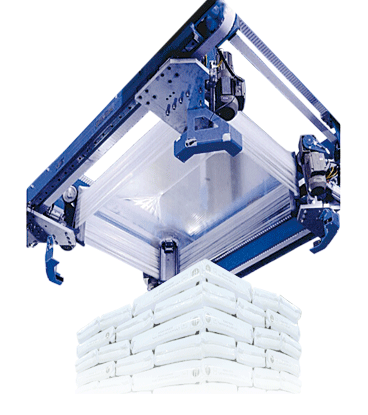
Industrial pallet wrap is not simply a thin layer of plastic. It is an engineered material designed to secure products against vibration, shifting, and impact during transportation.
When lower-performance wrapping film is used, operators typically compensate by applying more revolutions around the pallet.
Over time, this leads to:
For this reason, experienced packaging engineers usually evaluate three key aspects when selecting a film.
Resin Formulation
The resin blend used in manufacturing directly affects elasticity, cling, and durability.
Even small differences in formulation can significantly influence how efficiently the film stretches and holds a load.
Load Containment
Load containment refers to the holding force that keeps cartons or products tightly secured on a pallet.
Higher containment force generally means fewer wraps are required.
Real-World Durability
During shipping, pallet loads encounter sharp edges, vibration, and constant movement. A reliable stretch wrap must withstand these stresses without tearing or losing tension.

Although nano stretch wrap may appear more expensive at first glance, it is specifically designed to reduce overall packaging costs.
This improvement comes from a concept known as downgauging—using a thinner, higher-performance film to replace a thicker conventional one.
Superior Strength with Less Material
Traditional pallet films typically rely on thickness to deliver strength. Most conventional options contain five or seven layers.
Nano technology takes a different approach. By distributing material across dozens of micro-layers, the structure becomes both stronger and more flexible.
This allows a thinner industrial film to provide the same—or even better—load stability than thicker traditional wrap.
Reducing the “Zipper Effect”
One common issue in pallet wrapping operations is film tearing after a puncture.
With many conventional films, a small hole caused by a sharp corner quickly spreads across the entire wrap. This rapid tearing is often referred to as the zipper effect.
Multilayer nano films are far less vulnerable to this problem.
Because the structure contains many thin layers working together, damage in one layer is often contained by the surrounding layers.
For warehouses, this typically means:
Higher Stretch Efficiency
Another major advantage of nano wrapping film is its ability to achieve higher pre-stretch ratios without failing.
In practical terms, this means the material can be stretched further while maintaining its holding force.
The result is improved yield per roll:
Cost Per Pallet Comparison
When switching from a conventional 23-micron stretch wrap to a high-performance 12-micron nano film, the economics often change significantly.
|
Metric |
Conventional Film |
YD PACK Nano Film |
|
Film Thickness |
Thicker material required |
Thinner downgauged structure |
|
Puncture Resistance |
Moderate |
High multilayer durability |
|
Pallets Wrapped per Roll |
Lower yield |
Significantly higher yield |
|
Total Packaging Cost |
Higher long-term cost |
Potential 30–50% reduction |
For operations shipping hundreds or thousands of pallets each month, these differences can translate into substantial annual savings.
Across logistics and distribution centers, packaging decisions are increasingly driven by efficiency and sustainability.
High-performance pallet wrapping film offers several operational advantages:
For companies focused on optimizing their supply chain, these benefits make nano film an attractive upgrade over conventional materials.
At YD PACK, we specialize in manufacturing nano stretch film designed for modern pallet wrapping systems.
Our materials are engineered to help warehouses achieve:
By focusing on cost per pallet rather than price per roll, many companies are able to reduce packaging expenses while improving shipment stability.
If you’re interested in understanding how much material your operation could save, our team can evaluate your current wrapping process and recommend the most efficient solution.
What is the real cost of stretch film?
The true cost should be measured as cost per pallet wrapped, rather than the price of a single roll. This reflects actual material usage and load containment performance.
Why does nano stretch film reduce packaging costs?
Nano stretch film uses multilayer technology to increase strength and stretchability. This allows a thinner film to replace thicker traditional materials while maintaining load stability.
How can warehouses reduce stretch film consumption?
Packaging consumption can often be reduced by:
Previous page:Why Folded Edge Stretch Film is the Smart Choice for Industrial Packaging
Next page:No article
More News
2026-03-23
2026-03-18
2026-03-20
2026-03-16
2026-03-10
2026-03-09
2026-03-02
2026-02-24